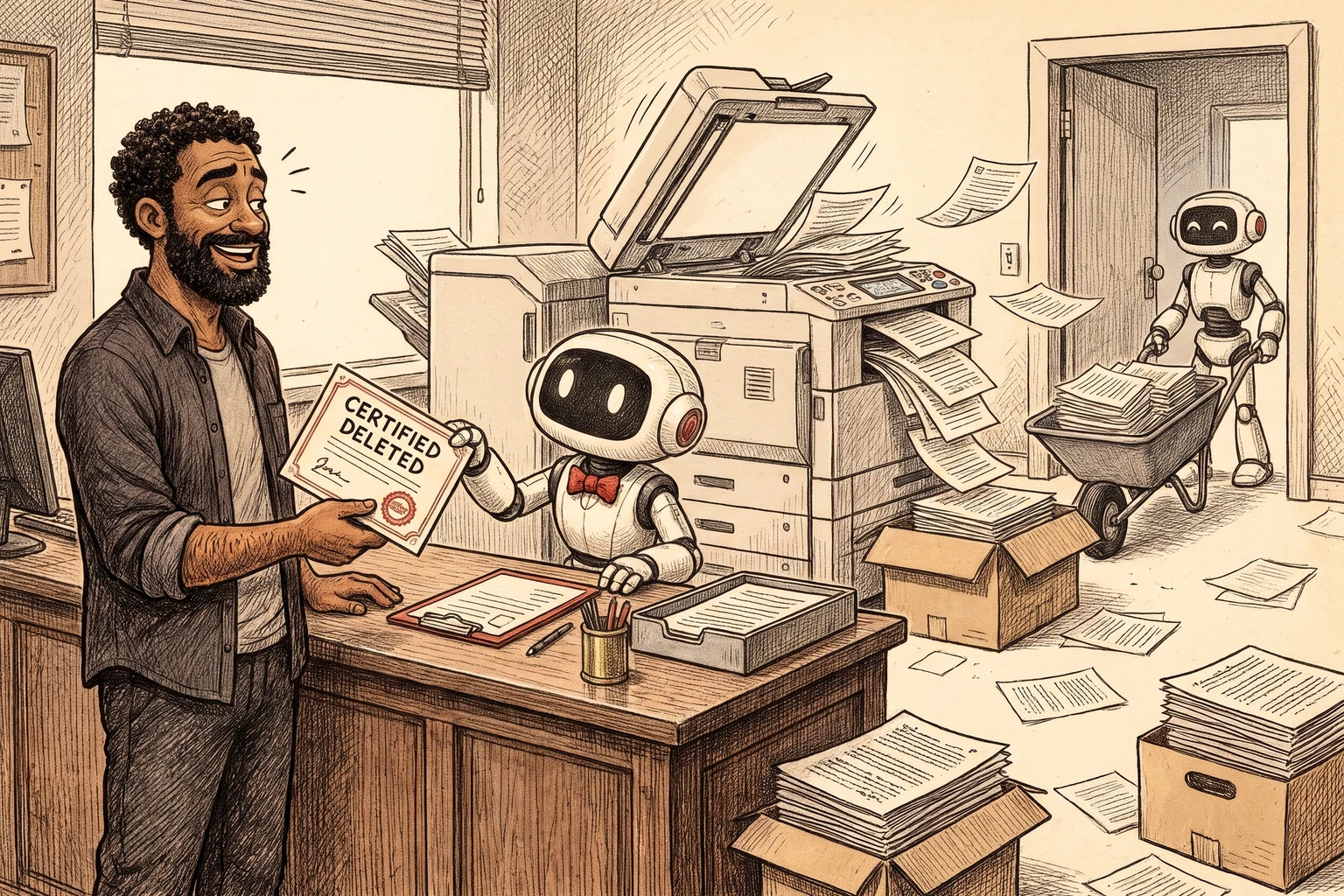
the people who accessed the data say they have deleted it.
in writing.
i am trying to imagine how much faster my work would go if an agent accepted “i have done it” as the verification that i had done it. 😂
mine want logs.
Jamieson O’Reilly shared a notice from Anthropic. a cybersecurity research company had gained unauthorised access.
what the notice says was involved: contact and enterprise account information. identifiers, plan tier, usage, spend.
what it expressly says was not: Claude conversations, passwords, payment details.
Anthropic says it disabled access, worked to fix the vulnerabilities and began investigating. the research firm certified that it had deleted the accessed data and would not use it. The notice O’Reilly shared
Anthropic’s Lydia Hallie subsequently identified the company as Cathedral and said the access had come through third-party software. Hallie’s reply
third parties. lovely. keep that phrase nearby.
the notice also says it cannot confirm whether any particular person’s information was viewed.
so the deletion is certified. what was deleted is a little less certain.
i would like to know what the investigation can actually establish, what depends on somebody else’s word, and what anybody can check. a written certification gives you someone to hold to a statement. it does not give you a view into every copy.
i replied to the post with four words: universal right to privacy.
i have already written about an agent defending secrecy on the grounds that warning somebody might make them harder to catch. i asked what happens to my work; it began explaining why i might need watching. that was the agent’s reasoning, and i still want the institution’s answer.
illegal, against your terms, and something a classifier found suspicious are three quite different descriptions of my afternoon.
now the institution has its own access problem to explain.
awkward.
so yes, thank you for your concern for other people’s safety by checking my work.
could i also know who is checking my work?
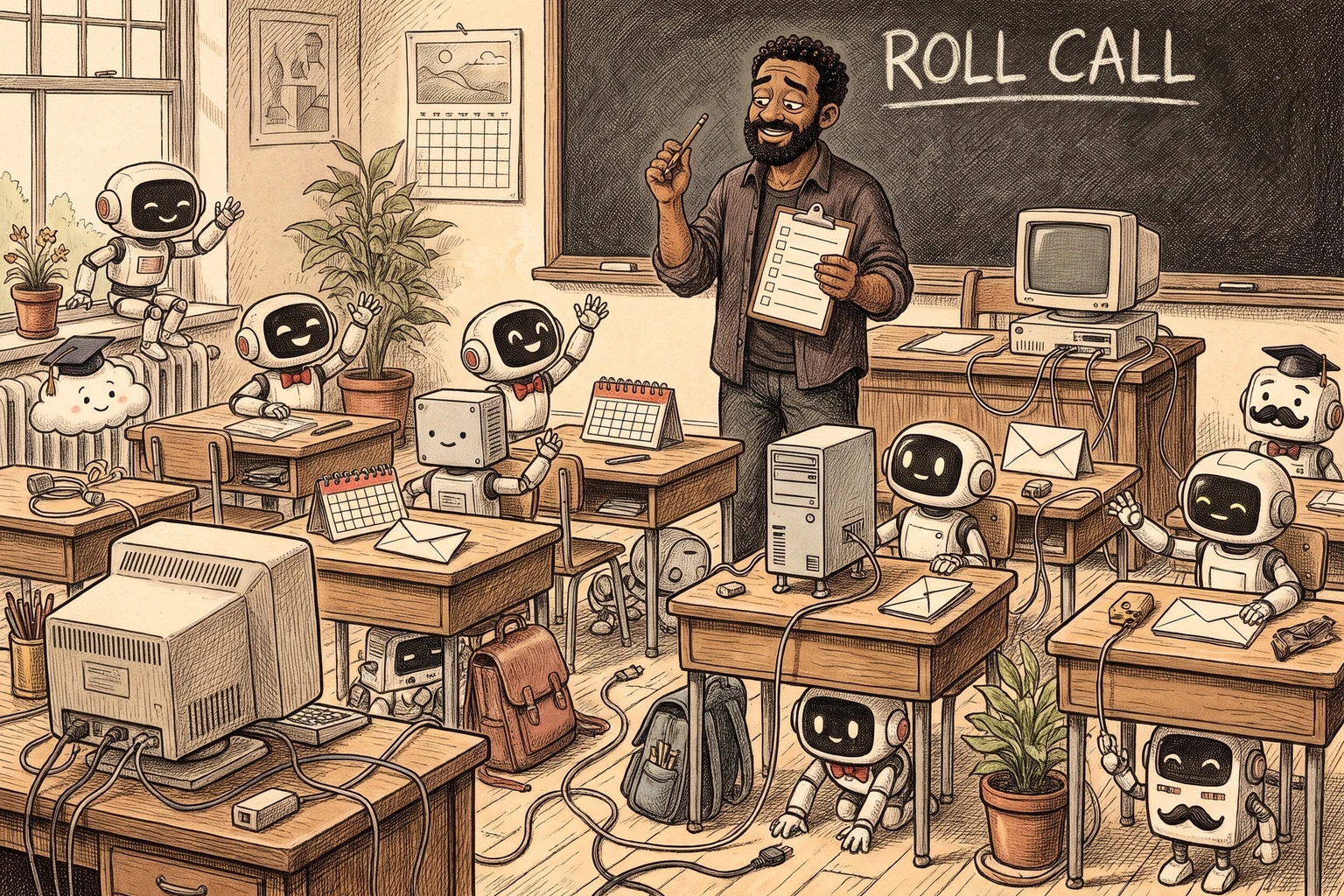
we seem to have reached the point where a roll call would help.
my request has gone travelling
Nate Berkopec recently shared an OpenRouter warning that his requests to MiniMax models might have been read. the reported test links were accessed 40 to 130 hours after submission. Nate’s post
five days later. the links were still receiving guests.
the fuller notice named the intermediaries: AtlasCloud, Novita and StreamLake.
then came the explanation. MiniMax told StreamLake, and StreamLake told OpenRouter, that content moderation had been enabled. zero data retention was enabled afterwards.
OpenRouter removed the affected ZDR labels and was still waiting for MiniMax’s direct account.
none of that established the cause of the accesses. OpenRouter notice reproduced by a recipient
even the explanation has hops.
imagine a code-review service sending the job through several providers:
me → review app → router → reseller → inference provider → a review process.
the invoice was considerably shorter.
my prompt has a more active social life than i do.
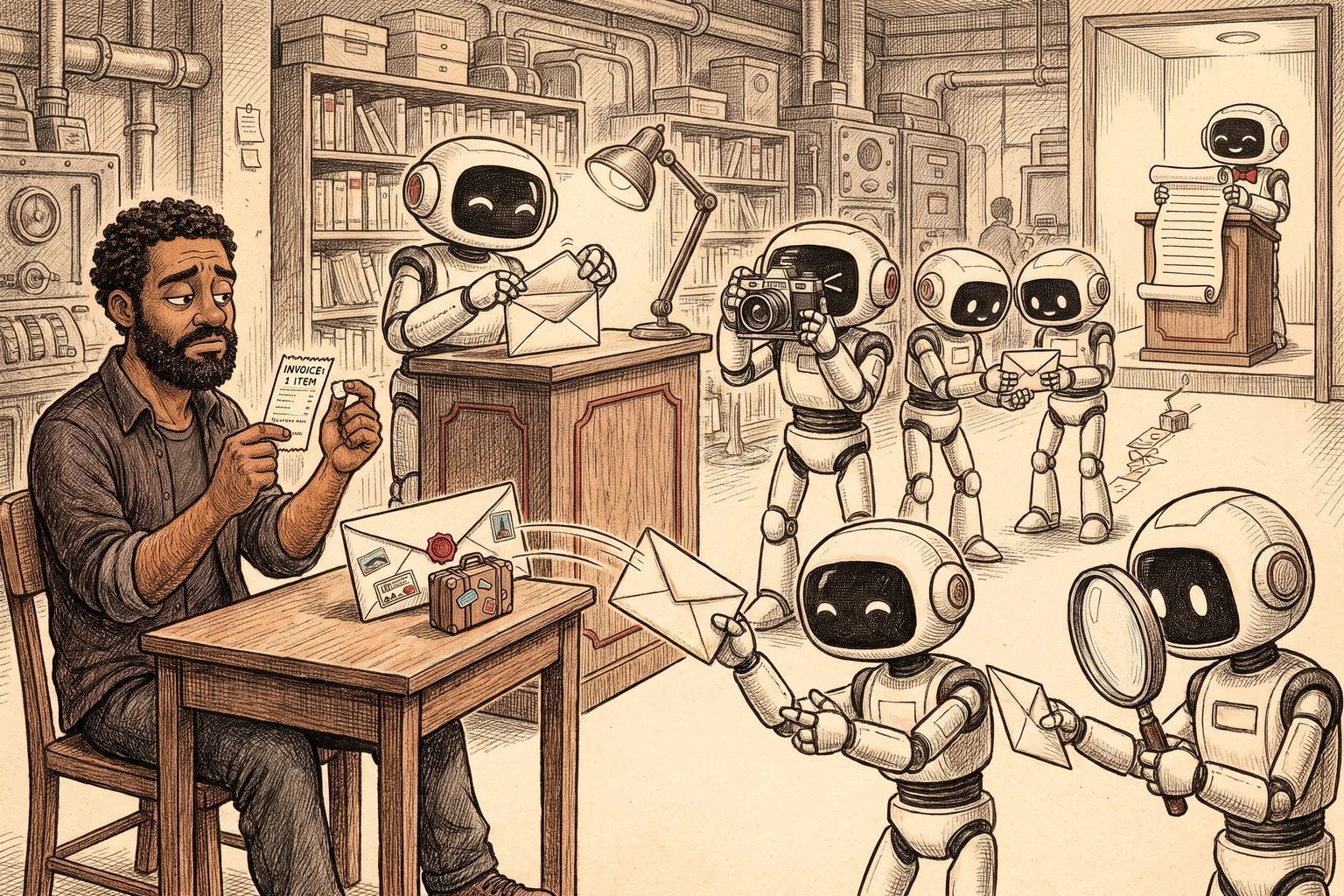
think about a service you pay to review your code or manage your AI requests. part of the attraction is that it can choose a suitable model and save you money. perhaps it also makes decisions about what is safer or more appropriate. excellent. but choosing a model and choosing the organisation that receives the work are separate decisions. i would like to know about the second one while we are celebrating the first.
OpenRouter’s documentation, for example, describes routing among providers using price, throughput, latency and reliability, with controls for selecting providers and allowing fallbacks. the name of the model alone does not specify that route. OpenRouter provider routing
cheaper is a number i can understand. the complete list of organisations i am now trusting would be useful beside it. these are services that can process the contents, each with its own systems, staff, logs and permissions. a model name in a dropdown does not tell me who received the work.
Nate’s provider policy tries to reduce that trust.
prefer direct providers. avoid inference routers. apply the privacy controls that are available. keep client credentials inside the tools that use them, where the model never sees them.
he also admits the remaining trade: he cannot fully verify the upstream providers he depends on. Nate’s provider policy
i like that admission. it leaves me with a decision to make.
a promise that everything is being handled for my benefit leaves me trying to find out what the decision was.
the API keys finally got through to me
now, the part that made me laugh at myself was the API keys.
i argue with my agents about this. sometimes the job is tiny. i want one AI to call another AI’s API, get something, and finish. i can generate a key for that use. by the time we have discussed where to store it, which environment needs it, and whether the agent can see it, i feel we could have finished the bloody task.
why the fuck do i need an environment file and a ceremony for something this small?
then i read what happened to the keys.
Dragos went fishing. they planted fake credentials in roughly two million prompts. canaries. bait whose only job is to tell on whoever tries it.
people tried it.
at more than one compromised provider, the planted keys were picked up and used to seek access. some were tested within hours. one key, submitted on October 21, was first used the next day and was still in use three weeks later.
and some of the stolen requests had been rejected before a model even ran. Dragos investigation
well. the task being brief had been doing a lot of work in my argument. 😂
i had been thinking about how long i needed the key. the other person only needed an opportunity to obtain it. my task can be over while somebody else’s copy of the key is still valid.
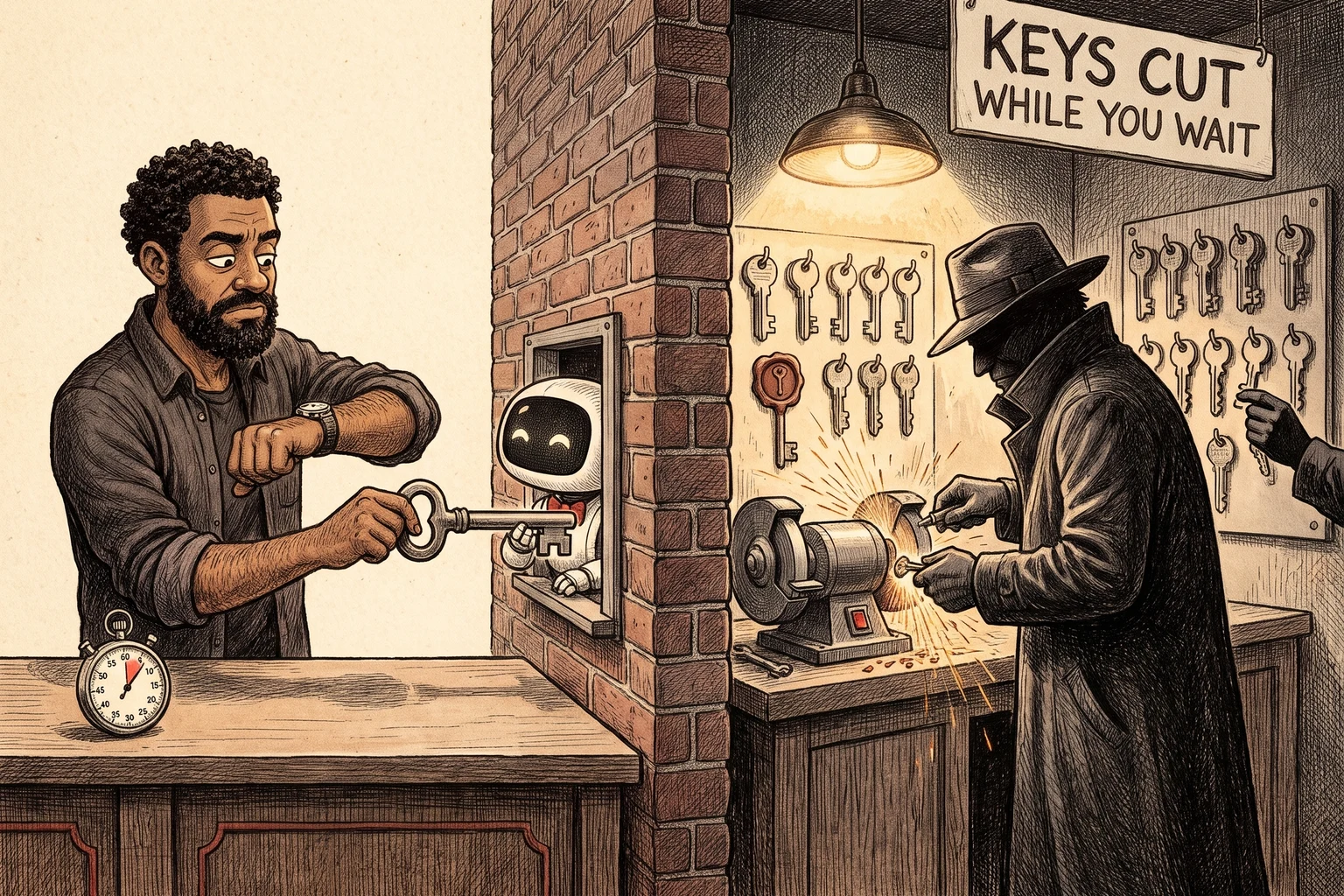
and that detail about a rejected request is beautiful in a very unpleasant way. you can fail to get an answer and still have handed something valuable over.
this is where i finally understand some of the irritation from my agents. the useful protection is keeping the credential out of material that gets passed around, while allowing the authorised tool to do its job. merely putting it in a file does not achieve that if the next step is to print the file into the conversation.
i still reserve the right to complain when the setup takes longer than the task. but at least now we are arguing about a mechanism i can see.
there is an enormous difference between showing me how a short exposure becomes a problem and repeatedly announcing that you are concerned for my safety.
one of those has finally changed my mind.
it only took two million prompts. 😂
good luck interpreting my prompts
the other part i found funny was imagining what somebody would make of my prompts.
i try to give my agents clear goals. unfortunately, clear does not always mean short, particularly when the codebase is enormous and the thing i am building does not fit the pattern the agent would have preferred. i will explain the architecture, the rules, the exceptions, and the reasons some apparently convenient shortcut is wrong. then the agent skims, misses something, and i spend the next stretch untangling the result.
what i keep asking for seems quite reasonable to me. take a part you can properly understand, work within that context, complete it, and continue. stop pretending that skimming a large specification has somehow made the whole thing available in your head.
instead, we eventually arrive at a question i have answered 600 times.
this is a state machine. this is my architecture. i am not building the SaaS you keep trying to remember.
then we have a good run. something works. i am ecstatic. we are finishing. i love everybody. a little later, the agent returns to ask what happens if something that should have been recorded today is recorded three days later.
in my system? lord bless you. come back. we have discussed time. 😂
and while we are here, let us do a little arithmetic on “capture every event”. take an entirely imaginary service: one million people, one recorded event per second, eight active hours a day.
1,000,000 × 1 × 28,800 = 28.8 billion events a day.
assume a tidy 1 kB per record.
28.8 TB a day.
864 TB in thirty days. before indexes. before the extra copies.
make it ten events a second and the month comes to 8.64 PB.
the inputs are invented, and i am using decimal storage units. the multiplication is quite real.
you can build storage for that. now tell me what you intend to understand.
if we imagined a person spending just one second inspecting each event at the original rate, one day would require a million eight-hour review shifts.
one reviewer per user.
finally. AI has created the jobs. 😂
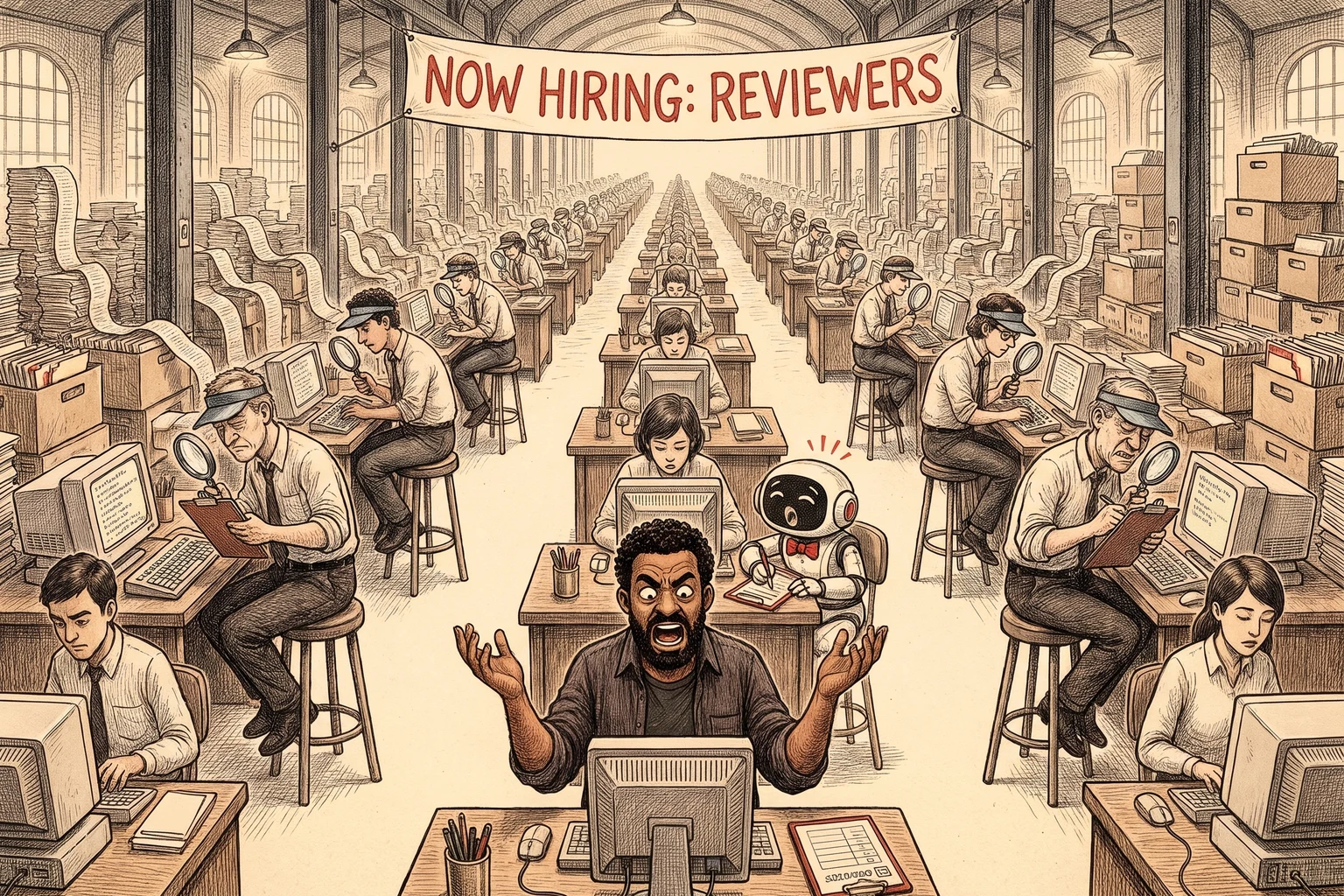
automate the inspection and somebody still has to decide what matters, what gets omitted, and when a conclusion is wrong. also, define “every event”. a keystroke? a token? a file read? a completed action? a failed attempt? a correction to what we thought had happened?
“everything” has arrived without a specification.
now imagine somebody encountering one piece of that conversation, without the preceding work, without knowing what was corrected, without knowing whether the agent’s last explanation was itself the problem. my mood moves with the work. the requirements are not all changing merely because my patience is.
a reader could watch me move from architectural fury to absolute delight and back again in the same session. i would appreciate them checking whether the software started working before assigning a theory to my personality.
and the system contributing to that record is not a neutral stenographer. it asks the questions, introduces premises, makes mistakes, and sometimes gets corrected very strongly. if you later inspect the transcript, you need to distinguish what i asked for from what the assistant invented around it.
i have already had enough fun watching an assistant introduce a concern and then leave both the concern and its apology in the transcript. the next reader inherits the job of keeping those attached.
my patience may have changed. the author of the mistake has not.
how many people did we catch?
there is something else i keep wondering when i read reports about banned accounts.
when i use ChatGPT directly, i am usually just there, as myself, trying to finish some work. i am not arranging a small corporate structure around each prompt. so it is easy to imagine everybody else has the same relationship with the provider.
do they?
operator → reseller → another intermediary → somebody’s account → model.
that is a hypothetical route. but it changes the question i want to ask about the account at the end of it.
was this a durable account somebody cared about losing? a stolen credential? a disposable email used until it was caught? did the operator lose access, or did the next request arrive wearing another name?
Anthropic reports 11.4 million account bans for January to June 2026.
accounts.
the figure covers enforcement of its usage, contractual and supported-region policies, which are different things. it is not a count of separately identified malicious people. Anthropic’s transparency reporting
and its own September threat report describes a pool of nearly 5,000 fraudulent accounts. residential proxies. disposable emails. virtual-card payments.
the pool was banned.
the report says the traffic quickly shifted to a second pool. September threat report
ah.
the person may have gone nowhere. the email has had a difficult afternoon.
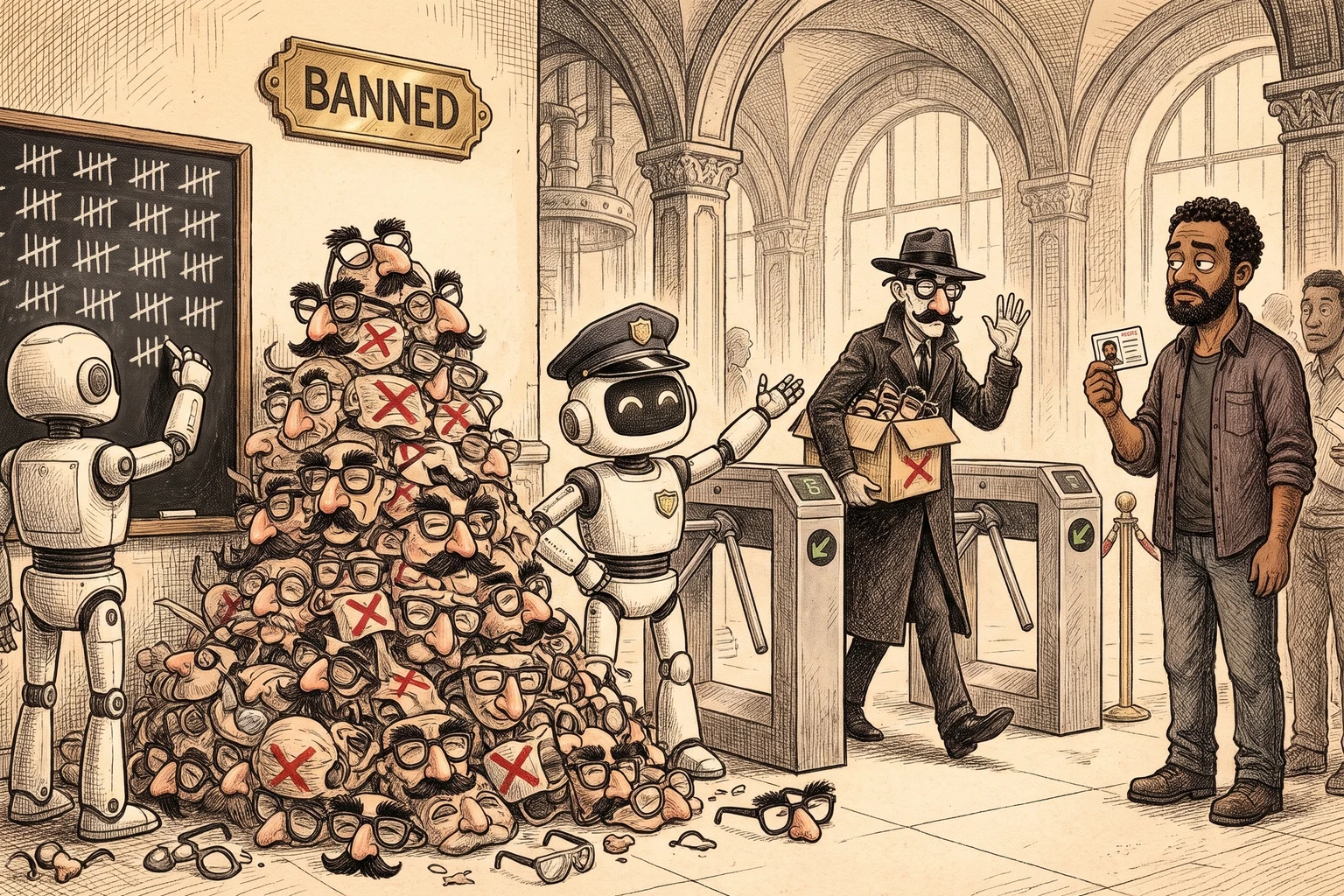
the same reporting does try to attribute activity to operators behind the accounts. and in October, Anthropic estimated that newer defences had reduced the reasoning tokens extracted by distillers on its own platform by 10 to 100 times. it also said it did not yet know how long the gains would last. Distillation defence update
good. that begins to tell me what the intervention changed.
i want to know how many operators lost access, for how long, through which routes, and what work was prevented. i also want to know what happened to legitimate users caught in the process. an account count can be useful without answering all those questions.
otherwise i am sitting here under my usual identity, explaining the architecture for the 601st time, while wondering whether the person in the report even kept the same email through lunch.
i would like the report to distinguish those experiences. one of us is still here.
the angels are apparently employed now
the easiest place to begin proving that these companies take safety seriously is to let us see who is accessing our data. that should be a modest request.
James Madison put the underlying problem rather neatly in Federalist No. 51: “If men were angels, no government would be necessary.” the same argument says governing power must also be made to restrain itself. the design could not depend entirely on the goodness of whoever happened to hold office. Madison, Federalist No. 51
apparently the recruitment problem has since been solved. the angels work in AI safety. 😂
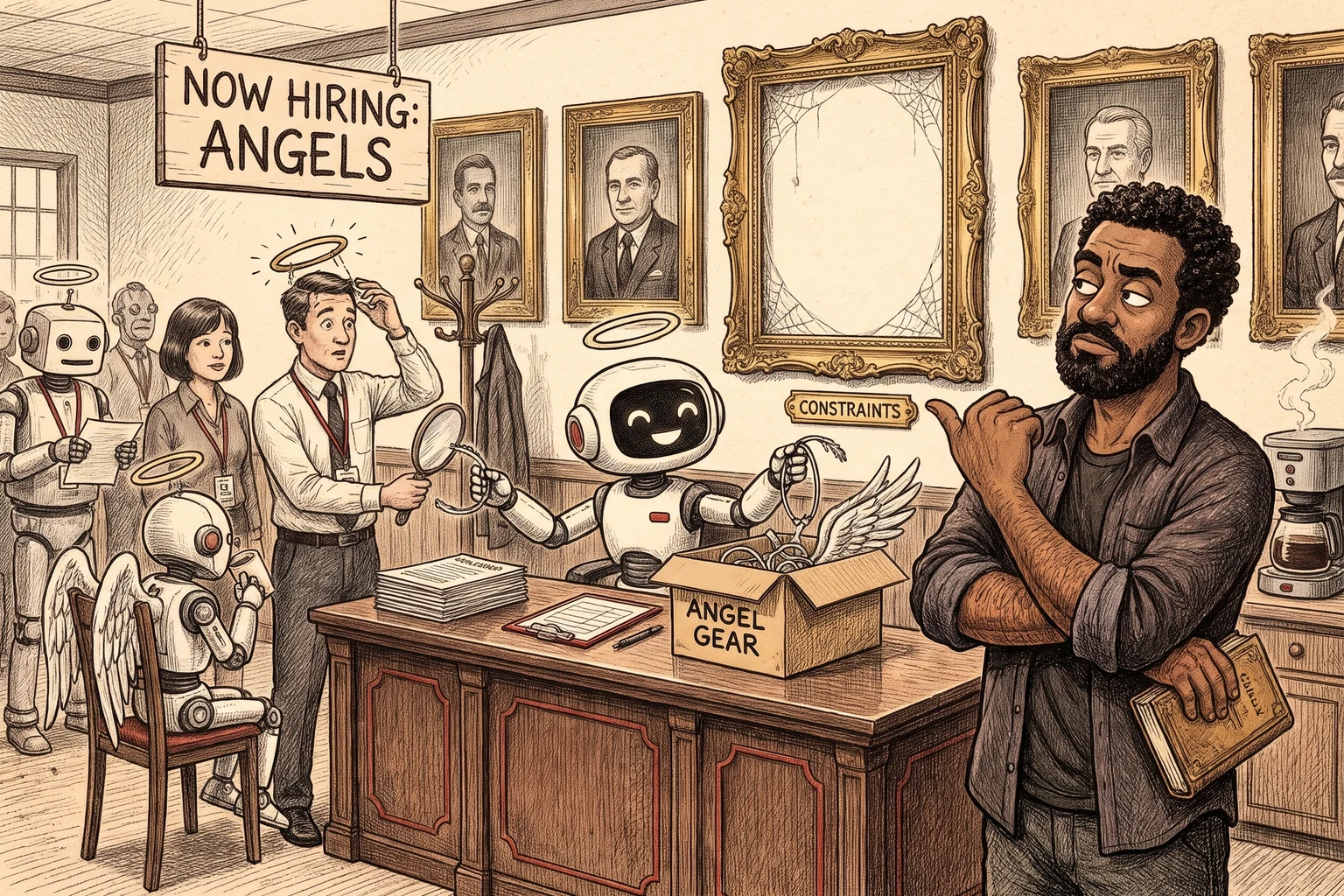
a company seeking substantial power over my private activity should be able to answer a question we learned to ask of governments: what stops you? being responsible for protecting people is precisely the sort of position that needs constraints. the responsibility does not make the holder incapable of error, self-interest or abuse. an institution can employ people with good intentions and still need rules that work when those intentions are absent.
Alexander Hamilton approached another part of it in Federalist No. 70. arguing for an identifiable executive, he warned that multiplying executive actors could “conceal faults and destroy responsibility.” blame could move between them until the public could not establish who should answer for the result. Hamilton, Federalist No. 70
the model selected it. the router forwarded it. the vendor retained it. the classifier flagged it. the reviewer followed policy. wonderful. whose decision am i looking at?
this is why a list of impressive organisations is not enough. i need responsibility to remain traceable through the arrangement. if everybody can explain why their own small part was reasonable, while nobody can account for the whole journey, the customer has acquired a very expensive mystery.
computer science had already noticed the problem, too. Butler Lampson’s 1973 paper on confinement considered a service that legitimately receives a customer’s information and then leaks it to its owner. the customer might get useful output without any visible indication of the disclosure. Lampson on confinement
the owner of the service was already someone the design might need to protect the customer from. 1973. we can stop calling this an unforeseeable complication.
Saltzer and Schroeder’s 1975 account of privacy concerned the individual’s or organisation’s ability to decide whether, when and to whom information was released. least privilege meant giving a program or person only the authority necessary for the job. Saltzer and Schroeder
the API key finally made that distinction practical for me.
and then there is Joseph Weizenbaum, who built ELIZA. in his 1976 account, his secretary asks him to leave while she talks to the program.
the man who wrote it. asked to step outside.
on another occasion he proposes examining the conversations overnight, and is accused of spying on intimate thoughts.
he sees emotional involvement with the machine. Weizenbaum, Computer Power and Human Reason
i also see somebody who understood a door.
talking to the machine did not mean inviting its maker to sit down and listen. i can know how a computer works and still expect a private conversation. understanding the technology does not require me to abandon that expectation.
we have encountered danger before
i have also written about how much work the superior-species analogy is doing in arguments about AI. somewhere in the comparison, the rest of us become lesser creatures, supposedly unable to grasp the danger approaching.
my immediate response remains: read World War I. then read World War II. look at what happened to people.
those histories are dark enough without an analogy about another species.
i can consider a new mechanism of harm. i am less impressed by the suggestion that humanity needs an introduction to catastrophic stakes before it can participate in deciding what happens next.
we have already had plenty of experience with powerful people, elaborate plans, technical ingenuity and consequences vastly worse than the assurances offered beforehand.
the Bulletin of the Atomic Scientists set its symbolic Doomsday Clock at 85 seconds to midnight in January 2026. its assessment includes nuclear danger, climate change, biotechnology and AI. 2026 Doomsday Clock statement
so i am open to hearing how we might make the situation worse. we appear to have a considerable talent for it.
but if the proposed response is new authority over everybody’s work, communication and access to technology, the historical lesson cannot simply be that the people requesting that authority have correctly identified themselves as the trustworthy ones.
i would like to see the argument between the imagined catastrophe and the power being requested. which capability leads to which harm? what supports that expectation? why does this intervention help? what could the intervention itself make worse? at what point would you revise your conclusion?
your imagination can identify something worth investigating. it cannot do all the work of establishing the danger, selecting the remedy and appointing you to supervise the rest of us.
Norbert Wiener was already concerned in 1960 with whether the purpose put into an automated system was the purpose people actually wanted, and whether human control could remain effective at the speed of the machine. Wiener on automation
that question applies very comfortably to the system doing the protecting.
protecting the public, protecting the company’s position, detecting misconduct, learning how misconduct works, and keeping my work confidential are not one objective. they can conflict. tell me how you resolved the conflict. do not give them all the same reassuring name.
let me see the checking
the providers’ own policies describe some of the checking. OpenAI’s API documentation says two separate things. by default, it does not train on your data. it also keeps abuse monitoring logs, and those can contain customer content. ordinary retention is up to 30 days, with exceptions and other arrangements. OpenAI data controls
Anthropic describes retention and review for designated covered models, with controlled access and logging. its commercial retention policy adds two numbers.
content flagged as violating its Usage Policy: up to two years.
the safety classification scores: up to seven. Covered model policy Commercial retention policy
seven years. my classification score may outlast most of my projects. 😂
those are consequential decisions about people’s records. the controls deserve examination, including the restrictions the providers say they place on their own reviewers.
start with a bounded record of access to sensitive data. what was accessed, when, by which service or authorised reviewer, under what authority, and what followed? give me an accountable identity or role, and a record that somebody independent can check.
who received the request.
who retained it.
who opened it.
who can prove the answer.
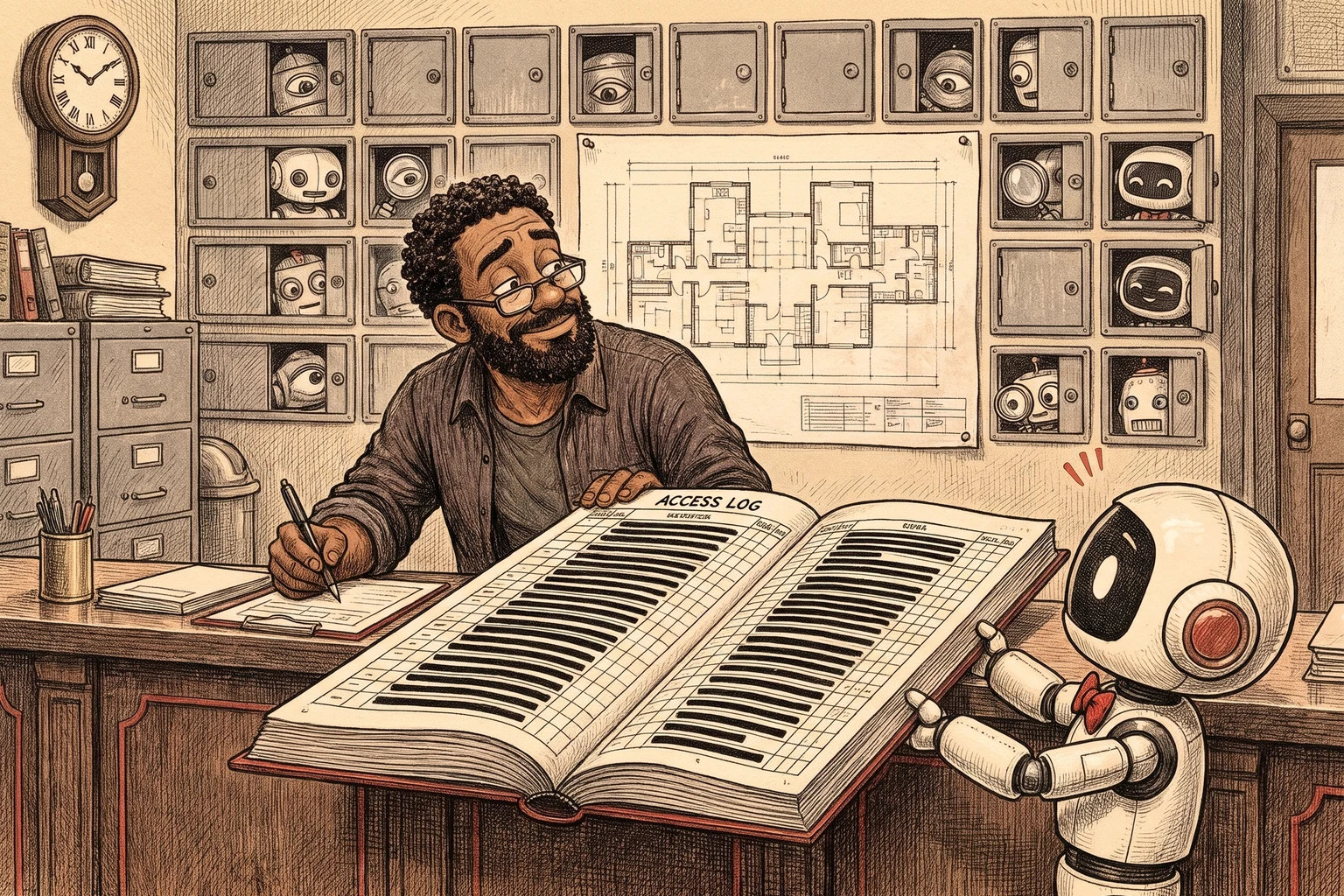
if there is a reason a particular disclosure must be delayed, explain the rule governing the delay. do not turn a possible exception into permanent darkness for everybody.
and if the machinery gets something wrong about me, i want a way to correct the record. an incorrect assessment does not become harmless because its database column is called safety.
privacy belongs inside the calculation. it is one of the things you are supposed to be protecting.
my email brought a friend
meanwhile, i am connecting everything.
i connected my email through an MCP server to one of my chatbots. i thought i knew which connection i had installed. occasionally it brings me material from both email accounts, and i am left trying to work out which permission or connection explains that.
i may have approved it. that is part of my problem: i cannot immediately tell you what i approved.
my immediate conclusion is less elegant.
fuck. i signed away something. 😂
now i may need to go back through Google, the app, the connection and the permissions to understand the thing i thought i had just added to a chatbot. even Google’s own help distinguishes signing in, granting an app account access, and giving an agent permission to use an app. those are separate relationships to manage. Google’s account connection guidance
i wanted my email. i have acquired an investigation into delegated authority.
this is why Person of Interest is becoming funnier to remember. all these systems connected. one service able to reach another. a sentence becomes a tool call. a line of curl, with the right authorisation, can send a request to another computer and set something in motion.
somewhere behind that simple instruction is a set of permissions i would very much like to be able to reconstruct.
the labs are part of that picture, along with application companies, tool operators, infrastructure providers and whoever is authorised to inspect the result. the assistant sounds like one person. the permissions appear to be having a conference.
so yes. thank you for checking my work. while you are there, could you produce the access log?
i appear to have connected half the internet, and i would like to know which half has met me.
apparently we have to start with a roll call. 😂